Why Doctor Strange is the best MCU movie: 10 reasons
And other superhero-movie hot takes
“Is there a better Marvel movie than Captain America: The Winter Soldier?” asked my friend Denes House on Facebook last year. This is not an unpopular opinion; here is Denes’s take on the case for this movie:
It is a taut, paranoid spy thriller that just happens to feature superheroes. The characters are vividly drawn, the action sequences are fantastic, and the whole thing has stakes that are both personal and global. Scarlett Johansson is at her Marvel best in this film; it features the best Captain America costume, and some of the best Captain America moments. Robert Redford’s Alexander Pierce is a serviceable villain, and if it’s not Redford’s best performance, at least the man on his worst day is better than most actors at their peak.
Historically, I’ve said that my Top 5 MCU movies are, in alphabetical order:
- The Avengers (2012)
- Black Panther (2018)
- Doctor Strange (2016)
- Guardians of the Galaxy (2014)
- Iron Man (2008)
Regarding Captain America: The Winter Soldier, for what it’s worth, while I’m not the biggest fan, I do appreciate its relatively grounded action sequences (at least until the typically outsized, monumental finale), from the opening commando assault on a pirated ship to the celebrated elevator fight. Keeping action grounded is one way to make a superhero movie stand out in a sea of forgettable CGI spectacle. (If you do it well! Otherwise, it’s pedestrian. The Winter Soldier does it well.)
Then there’s the opposite tactic, employed by Scott Derrickson and his collaborators in Doctor Strange, starring Benedict Cumberbatch as Dr. Stephen Strange: making the action as fantastical and unreal as possible. This, too, needs to be done well, or it becomes weightless and cartoony. Doctor Strange does it well.
This is the first and most important reason that Doctor Strange has become my favorite MCU movie …
Related
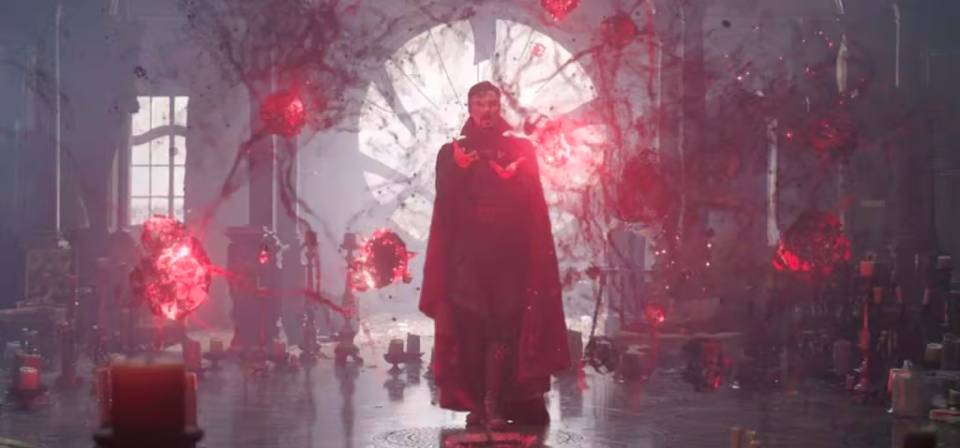
Doctor Strange in the Multiverse of Madness (2022)
I’m thinking of a moment in the original movie in which Stephen looks skeptically at a deeply corrupted individual nattering about the greater good and retorts, “No. I mean, come on — look at your face.” Nobody says that in the sequel, but they should.
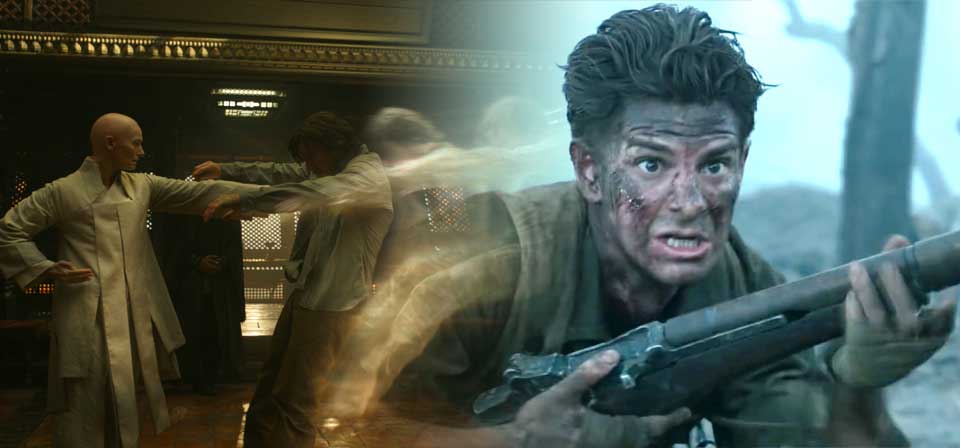
Doctor Strange and Hacksaw Ridge: Breaking rules and the greater good
In each of their latest films, the battle against a threatening power raises questions about which principles the protagonist should or shouldn’t compromise in order to protect his world — questions that aren’t necessarily clearly answered by the end of the film.
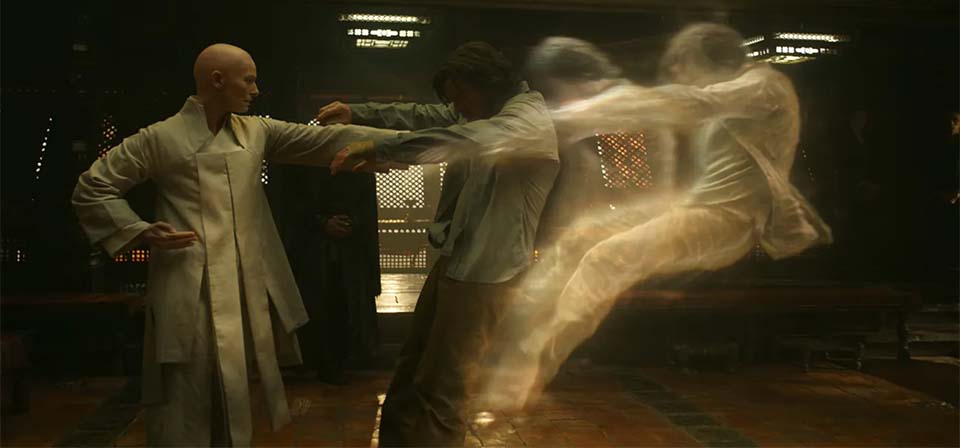
Doctor Strange (2016)
The paradox of contemporary Hollywood blockbusters is that in our time virtually anything conceivable, no matter how wild and out there, can be put on the screen, but it almost never is.
Recent
- ‘Those books created me’: Greta Gerwig on Narnia: The Magician’s Nephew
- American Martyr: An Oklahoma priest’s unlikely bond with persecuted Mayans in war-torn Guatemala
- Father Stanley Rother’s gift of presence: Interview with María Ruiz Scaperlanda
- The Odyssey and the consequences of war
- Why Doctor Strange is the best MCU movie: 10 reasons
Home Video
Copyright © 2000– Steven D. Greydanus. All rights reserved.