Articles
Family Films Move Forward in 2008
Wall‑E is more than another confirmation of Pixar’s moviemaking virtuosity and magic touch with family audiences. It’s the crown jewel in a year that had in some respects had a bit more to offer family audiences from Hollywood than other recent years.
Hollywood and Religion: Priests, Nuns and the American Silver Screen
An old witticism has it that Golden Age Hollywood was “a Jewish-owned business selling Catholic theology to Protestant America.” If not strictly accurate, the bon mot contains more than a kernel of truth.
Twilight Appeal: The cult of Edward Cullen and vampire love in Stephenie Meyer’s novels and the new film (2008)
Chastity is a precious thing, and the struggle to be chaste is both an inevitable part of a moral life and a legitimate subject for narrative art. In part, this quest for chastity may legitimately form some part of Twilight’s appeal. At the same time, a narrative that wallows in the intoxicating power of temptation and desire, that returns again and again to rhapsodizing about the beauty of forbidden fruit, may reasonably be felt to be a hindrance rather than an affirmation of self-mastery.
Of Bond, Batmobiles and Bullwhips
By rights, pulp heroes like Batman and James Bond belong to this world of escapism, not the world of The Godfather. Bond was even one of the original inspirations for Indiana Jones. (“I’ve got something better than James Bond” was how Lucas pitched the character to Steven Spielberg.) Now, though, the boundaries are becoming less clear.
Hellboy and Spiritual Warfare, Hollywood Style
You won’t find the gospel in movies like Hellboy. What you may find is signs of a world that has been touched by the gospel — a world that retains some awareness of sinister forces to be avoided or resisted, of evil that cannot be overcome by therapy or education or communication, that calls for a response from another realm entirely.
Eye Candy and Vague Faith: Narnia Filmmakers Talk Prince Caspian
Speaking by phone from New York, producer Douglas Gresham, Lewis’s stepson and heir, suggested that the new film’s more mature tone was partly a reflection of the book itself. “The Lion, the Witch and the Wardrobe was written very much to be read aloud,” Gresham explained. “With Prince Caspian, in [Lewis’s] mind his audience had moved up a few years in age, and so Prince Caspian was written for them to read to themselves.”
Constantine’s Sword: James Carroll’s flawed history comes to the screen (2007)
The most serious problem with Constantine’s Sword, though, is not its historical distortions. The most serious problem is its out-and-out attack on Christianity as such. It is not merely antisemitism that troubles Carroll. It is not even only Jesus’ death and resurrection. Ultimately, it is the very belief that in Jesus God did something both unique and definitive, something with universal applicability for all mankind.
Faith and Film Criticism: The Challenge of the Catholic Critic
No critic can offer a one-size-fits-all approach for all committed Christians. I can’t, and have never tried to, tell anyone what to think or watch, or make definitive pronouncements about good or bad movies. I’m not the Pope; I’m not even the pope of movies. There is no pope of movies. Even the Pope isn’t the pope of movies.
2007: The Year in DVDs
2007 was a remarkable DVD year for fans of the Vatican film list.
2007: The year in reviews
There were ultrasounds. Disturbing images of post-abortion fetuses. Mention of fetal heartbeat and ability to feel pain. One way or another, over half a dozen 2007 films found themselves reckoning with the reality of life in the womb. It’s fair to call 2007 the cinematic year of the unborn child.
Bella: Metanoia Films’ award-winning first film about wounded hearts, family and a crisis pregnancy celebrates love, life and understanding
For Verástegui — a former boy-band and telenovela heartthrob known to Latino fans as “the Mexican Brad Pitt” — the mission is simple. “Hollywood doesn’t belong to the studios,” he recently told Decent Films. “Hollywood belongs to God. And we need to take it back. And that’s what I’m trying to do, by example first, trying my best every day to be involved in projects that will inspire people to use their talents to do something positive for the world.”
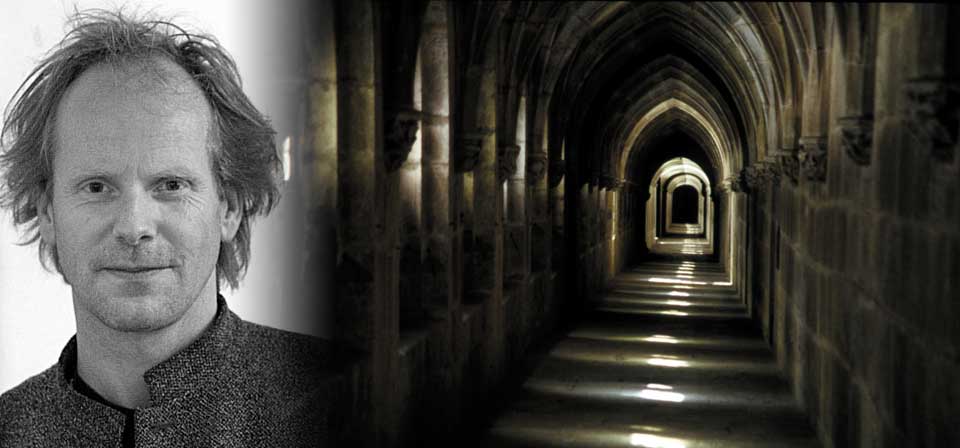
Voyage into Silence: Interview with Philip Gröning
In 1984, filmmaker Philip Gröning had an idea for a film. He took his proposal to the prior of the Grande Chartreuse monastery, the head monastery of the Carthusian order, high in the French Alps between Grenoble and Chambéry. Gröning wanted to shoot a documentary inside the Grande Chartreuse — not an ordinary documentary, concerned with the transmission of information, but a spiritual voyage into the inner meaning and experience of monastic life.
The Passion of the Christ: A Note on the DVD “Definitive Edition”
The original DVD edition of The Passion of the Christ was a “bare bones” edition featuring only the film itself. This week’s two-disc “Definitive Edition” is packed with extras, from The Passion Recut (which trims about six minutes of some of the most intense violence) to four separate commentaries.
Becket Back on the Big Screen
It’s a classic. It’s beloved, if for decades only on VHS. It’s got big stars, terrific performances, witty dialogue. Its blend of sex, spectacle and spirituality surpasses anything Cecil B. DeMille ever attempted. So why has Becket never been restored and brought to DVD in the style it richly deserves?
Must-see DVDs of 2006
When you walk into an average DVD store, “New Releases” dominate the displays. “New Releases,” of course, are generally the movies that played in theaters in the last six to twenty-four months or so. Yet in fact every year many of the most exciting new DVD releases are movies that haven’t played in theaters in years, decades — or even longer.
2006: The year in reviews
It was a grim year at the movies — literally. War, death, dystopia, and other dark and downbeat subjects filled theater screens in 2006. Jeffrey Overstreet (Looking Closer) called it “the year of the nightmare.”
“Father Brown”: The ATV Series Now on DVD
Thirteen classic Father Brown stories — adapted with gratifying fidelity in the 1974 television series starring Kenneth More — are now available on DVD in a pair of two-disc box sets.
The Nativity Story and Catholic Teaching
In blogs, discussion boards, and other fora, a range of criticisms and objections concerning The Nativity Story have been raised by concerned Catholics. Some of these critiques are thoughtful and worthy of consideration, and raise issues regarding the film that have merit, or are at least defensible. Other complaints are more problematic, resting on misrepresentations of the film or even of Catholic teaching.
Christmas Story: Catherine Hardwicke and Mike Rich Discuss Bringing The Nativity Story to the Screen
Perhaps The Nativity Story will take its place as the missing Christmas film — the one that actually is about the real “real meaning of Christmas.”
St. Joseph Gets His Due: The Nativity Story Through the Eyes of Jesus’ Foster Father
Although The Nativity Story doesn’t portray Joseph as a widower, it also doesn’t depict Joseph and Mary’s relationship as a typical first-century Jewish courtship. While the film doesn’t take a stance one way or the other on the Catholic doctrine of Mary’s perpetual virginity, it finds drama in the obstacles between Joseph and Mary, rather than turning their story, as some retellings have done, into a Hollywood romance.
Recent
- Benoit Blanc goes to church: Mysteries and faith in Wake Up Dead Man
- Are there too many Jesus movies?
- Antidote to the digital revolution: Carlo Acutis: Roadmap to Reality
- “Not I, But God”: Interview with Carlo Acutis: Roadmap to Reality director Tim Moriarty
- Gunn’s Superman is silly and sincere, and that’s good. It could be smarter.
Home Video
Copyright © 2000– Steven D. Greydanus. All rights reserved.